
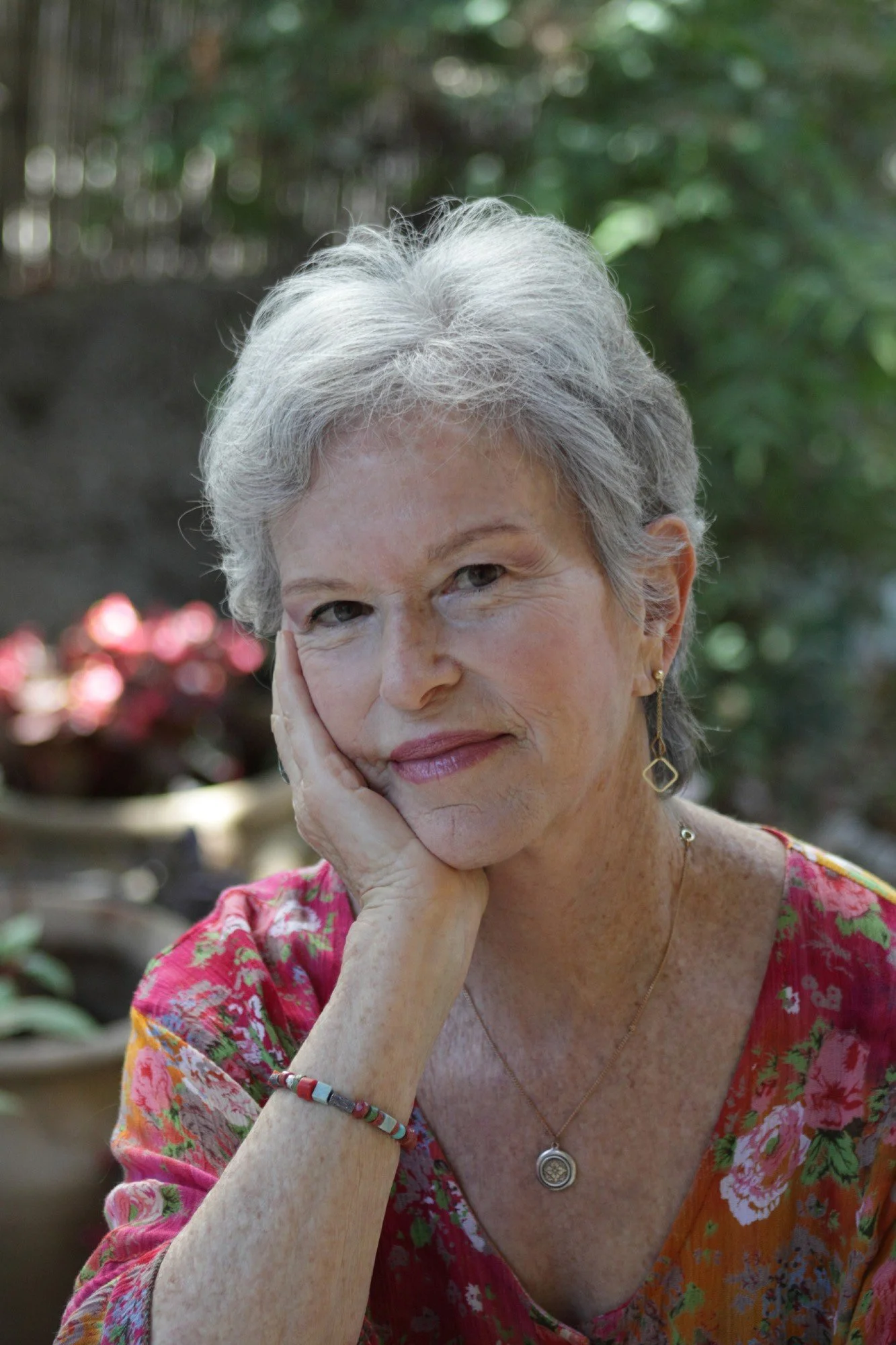
HAMUTAL BAR-YOSEF is the most recent recipient of the Bialik Prize in Literature (2026) for significant contributions to Hebrew literature. Her poetry has received numerous awards, including The Jerusalem Prize for Poetry (1997), The President of Israel Prize for Poetry (2002), and the Brenner Prize (2005). Her poems have been translated into English, French, German, Russian, Ukrainian, and Yiddish. Three of her collections have been translated into Arabic (Cairo 2010, Paris 2013, Ar'ara 2025) by Na'im Araidi, Nidaa Khouri and Moufid Sidawi. She contributes regularly to the Arabic-Hebrew monthly الإصلاح . Having been a visiting professor in Paris and Moscow, as well as Columbia University, Bar-Yosef now lives in Jerusalem. There, she has volunteered as a driver of Palestinian children going to Jerusalem hospitals, contributes to Ha'aretz, recently writing about the plight of Bedouins north of the Dead Sea. Bar-Yosef has participated in many demonstrations against the polices of the current Israeli government. She speaks basic Arabic and continues to nurture friendships and family ties with Palestinians during these difficult times.
In Bar-Yosef one finds again the religion that finds the sacred in the secular, as Scholem used Whitman to explain his own faith. Each of her poems adds up to a prayer-book, a niggun, and a place in time. . . . Her poems have the folded propriety and wild nights of Emily Dickinson. . . . [Her late work] is sometimes as cutting and flamboyant and painful as Tsvetaeva."—David Shapiro, from his Introduction
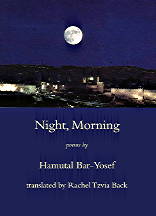
"Hamutal Bar-Yosef writes passionately and wisely about the convergence of historical tragedy and personal suffering. "I am a poisoned well," she declares in a prefatory poem, and then dives to the bottom of grief—the death of her brother in Israel's 1948 War of Independence, the suicide of a teenage son—and renders her losses movingly, without a trace of bathos or self-pity. Night, Morning is the perfect title for this selection of her poems, for here she juxtaposes death with the freshness of hibiscus, the beauty of a green leaf, the stirrings of love. Her rebirth in poetry comes clear in "The Tower of Tevits," a modern version of the biblical attack, where she recalls, "I screamed on the roof of the tower," and then, "There I learned to sing." In its investigation of personal and world sorrow, her work is on a par with that of the best poets writing today."—Grace Schulman
"A reasonably discerning reader of Hamutal Bar-Yosef in translation will find that although her poems are written about her life, which has been tragic and sometimes glorious, Israel, the Jews and their culture, life and the world—all very big subjects—her writing is such that if she were writing about a soap bubble she would be immediately recognizable as a great poet."—Stanley Moss
Quisque iaculis facilisis lacinia. Mauris euismod pellentesque tellus sit amet mollis.